

What Is a Sheet Metal Vacuum Lifter and How Do You Choose One?
A sheet metal vacuum lifter is a handling device that uses suction cups and a vacuum source to grip a metal sheet or plate. It is used for tasks such as laser cutting machine loading, plate unloading, stacking and transfer between production stations. The appropriate configuration depends on the workpiece weight, dimensions, surface condition, handling direction and available lifting equipment.
Vacuum gripping does not depend on magnetism, so it can be considered for suitable carbon steel, stainless steel and aluminium plates. A flat, non-porous contact surface is important for forming and maintaining the vacuum seal.
Which type should you choose? A pneumatic system is a candidate for frequent loading at a fixed station with compressed air. A battery system supplies vacuum without a trailing power cable during handling. An AC system suits repeated production with an available electrical supply, including heavier plate configurations. If the workpiece needs horizontal-to-vertical turning, assess a dedicated tilting vacuum lifter.
How does a sheet metal vacuum lifter work?
The vacuum source removes air from the space between the suction cups and the plate. The resulting pressure difference creates a gripping force. A frame positions the cups across the workpiece, while the supporting lifting system raises and transfers the load.
In WOLIFT's AC and battery project examples, an overhead crane provides lifting and travel, and the vacuum attachment provides gripping. The pneumatic sheet metal system uses a cylinder for vertical movement and a suitable supporting structure for positioning.
A typical handling cycle is:
- Position the cups on the approved contact areas of the sheet.
- Activate suction and confirm the required vacuum condition according to the operating instructions.
- Raise and transfer the sheet using the selected lifting arrangement.
- Place the sheet securely on the destination support.
- Release suction and move the device away.
The available holding force depends on vacuum level, effective cup area, leakage and the direction of loading. Plate stiffness, cup spacing and frame geometry also affect handling. A capacity rating must therefore be assessed together with the actual workpiece and cup arrangement.
What industries use sheet metal vacuum lifters?
Sheet metal vacuum lifters are used in metal fabrication, machinery manufacturing, steel service centres, metal surface treatment and panel assembly. Common applications include:
- Cutting machine loading: transferring sheets from pallets to laser, plasma or other cutting tables.
- Production-line unloading: removing treated or processed plates and transferring them to packaging.
- Plate storage and stacking: moving suitable sheets between storage positions and workstations.
- Assembly and positioning: presenting metal or other suitable panels at the required angle using a dedicated tilting configuration.
Top-surface gripping can reduce the need to reach under a sheet or engage its edges with hooks. It can also help protect sensitive finishes when cup material, cleanliness and contact positions are suitable. The actual effect on handling time and surface marks depends on the installation.
Pneumatic, battery or AC: what is the difference?
Power supply determines how the vacuum system operates. The lifting motion, supporting equipment and workpiece requirements must also be considered.
| System | Current published WOLIFT specifications | Application to assess | Main selection checks |
|---|---|---|---|
| Pneumatic sheet metal vacuum lifter | WO-BC500(AIR); 500 kg; 0.6–0.8 MPa compressed air; cylinder lifting | Frequent loading at a fixed cutting station | Air pressure and flow, cylinder stroke, working radius and support structure |
| Battery vacuum sheet metal lifter | WO-BC(DC); published 500–2,500 kg range; DC12V vacuum system | Transfers where a trailing power cable or air hose is inconvenient | Work cycle, charging plan, cup arrangement and crane or compatible transport equipment |
| AC electric vacuum sheet metal lifter | WO-BC(AC); published 500–10,000 kg range; AC208–460V, ±10% | Repeated plate handling with site power available | Voltage, cable routing, crane capacity, frame layout and backup configuration |
| 90° tilting vacuum lifter | WO-BCFZ; published 200–2,000 kg range; 0–90° turning | Panel assembly or positioning that requires angle changes | Centre of gravity, cup loading during turning, panel stiffness and clear space |
The published ranges describe product families. A quotation and project review establish the configuration for a particular plate. Explore the complete WOLIFT vacuum sheet metal lifter range for the individual product specifications.
Pneumatic systems for frequent station loading
A pneumatic system is useful to assess when the factory has a suitable compressed-air supply and the handling task is concentrated around one workstation. WOLIFT's WO-BC500(AIR) combines vacuum gripping with cylinder lifting. Its published configuration includes six Ø230 mm cups and manual control.
The cylinder stroke and support structure must suit the pickup and placement heights. Air supply requirements include both pressure and adequate flow during the intended operating cycle.
Battery systems for handling without a trailing power cable
A battery vacuum attachment supplies its vacuum system from onboard batteries. It still needs a suitable crane or other approved lifting arrangement to carry and move the load.
Battery consumption depends on the number of lifts, vacuum leakage, pump duty, plate surface and battery condition. Use the intended work cycle to assess charging requirements. Optional forklift pockets shown on WOLIFT's battery product page require a configuration review for the forklift and transfer route.
AC systems for repeated plate production
An AC vacuum lifter uses the site's electrical supply. It can be assessed for repeated production and heavier plate handling within WOLIFT's published range. Cable routing, voltage and the existing crane arrangement are part of the selection.
Vacuum alarms, reserve arrangements and backup equipment should be confirmed in the project specification. For example, the AC project below includes a separate backup unit containing a battery and vacuum pump; that project configuration should be distinguished from the general product family.
Tilting systems when the sheet must change angle
A dedicated tilting vacuum lifter provides controlled horizontal-to-vertical or vertical-to-horizontal movement. Turning changes the forces on the suction cups and workpiece, so the rated configuration must cover that motion.
A flat-transfer attachment should be selected separately from equipment intended for 0–90° turning. Specify the required angle, panel dimensions, centre of gravity and installation space during the initial review.
Three WOLIFT projects that illustrate the selection
Pneumatic: 500 kg laser cutting sheet loading
WOLIFT's pneumatic laser cutting loading case describes a 500 kg device paired with a 4 m column jib crane for 3015 and 4020 laser cutting stations. Compressed air supplies the system, a cylinder provides vertical lifting and six Ø230 mm cups grip the sheet.
This illustrates a fixed loading station where the supporting jib, cylinder travel and cup arrangement are selected around the cutting-table workflow.
AC: 3 tonne carbon steel plate handling after pickling
In China in 2024, WOLIFT supplied a WO-BC500AC attachment to a metal surface treatment factory for unloading plates from the end of a pickling line and transferring them to packaging.
| Project detail | Confirmed configuration |
|---|---|
| Main carbon steel plate | 12,000 × 2,500 mm; actual weight 3,000 kg |
| Lifter rated load | 5,000 kg |
| Suction cups | 12 × Ø450 mm, individually controlled |
| Frame and control | Fixed frame; manual suction and release |
| Power and crane | 380 V, 50 Hz via cable reel; existing 10 tonne overhead crane |
| Monitoring and backup | Pressure sensor, vacuum alarm and separate battery-plus-vacuum-pump UPS unit |
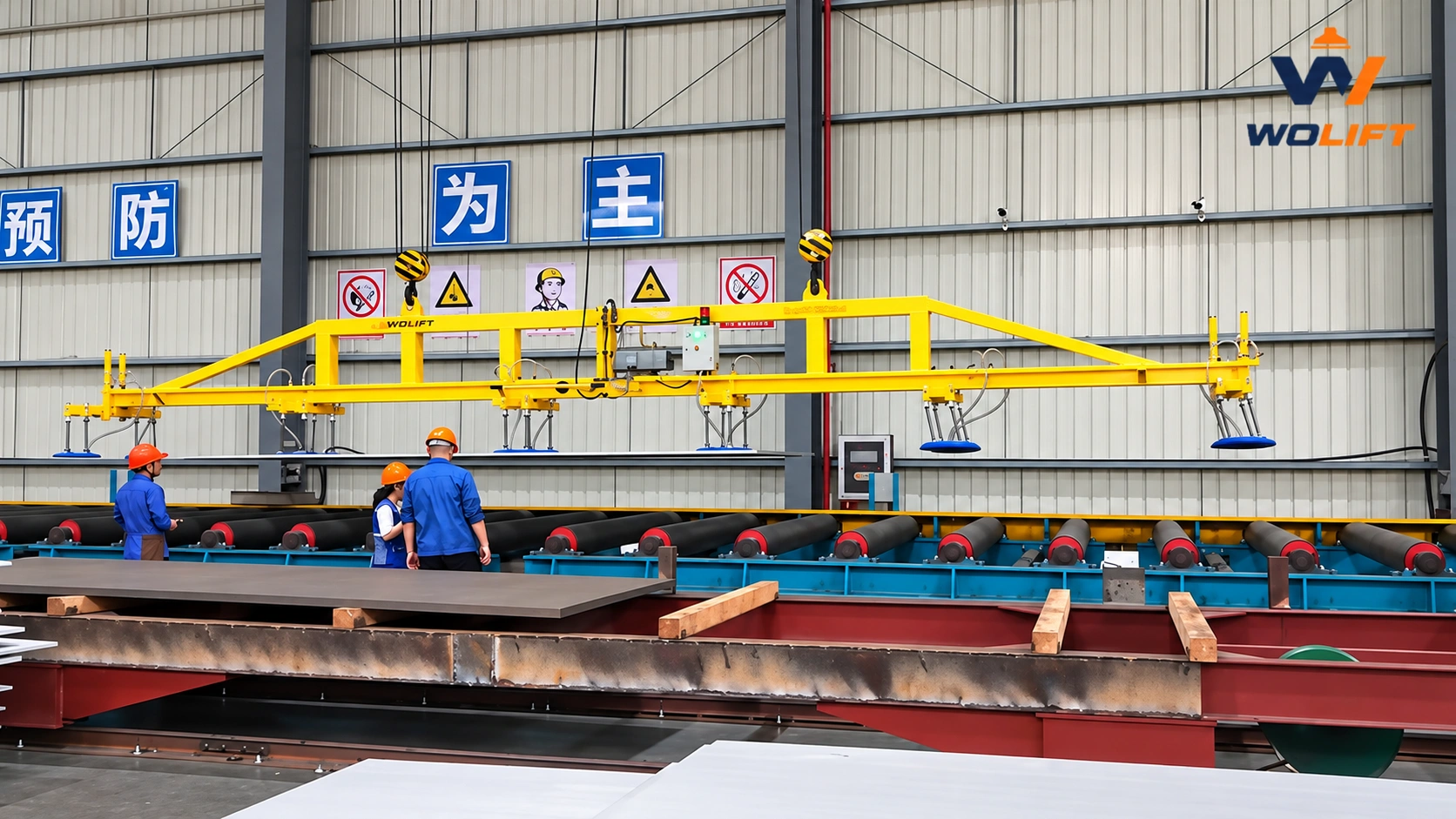
The previous hook method could scratch the treated plate surface. The customer reported that handling-related scratches fell to almost zero and unloading efficiency improved by approximately 30% after the vacuum lifter was introduced. These results describe customer feedback from this installation.
The case video shows a different approved arrangement: a 6,000 mm plate weighing 2,000 kg, with six active cups. The capacity of a reduced-cup arrangement must be confirmed separately from the full twelve-cup rating.
Read the AC vacuum lifter case for carbon steel plate unloading after pickling for the project video and full configuration.
Battery: 1 tonne laser cutting sheet loading in Latvia
In Latvia in 2025, WOLIFT supplied a WO-BC500DC battery vacuum lifter to a machinery manufacturer for pallet-to-laser-table loading with an existing overhead crane.
| Project detail | Confirmed configuration |
|---|---|
| Main described workpiece | Stainless steel, 3,000 × 1,500 mm; actual weight 1,000 kg |
| Lifter rated load | 1,000 kg |
| Suction cups | 8 × Ø300 mm |
| Batteries | Two 12 V, 15 Ah batteries |
| Control | Manual suction and release; self-locking release slide valve |
| Supporting equipment | Customer's overhead crane and 4020 laser cutting table |
| Monitoring | Vacuum alarm and low-battery indication |
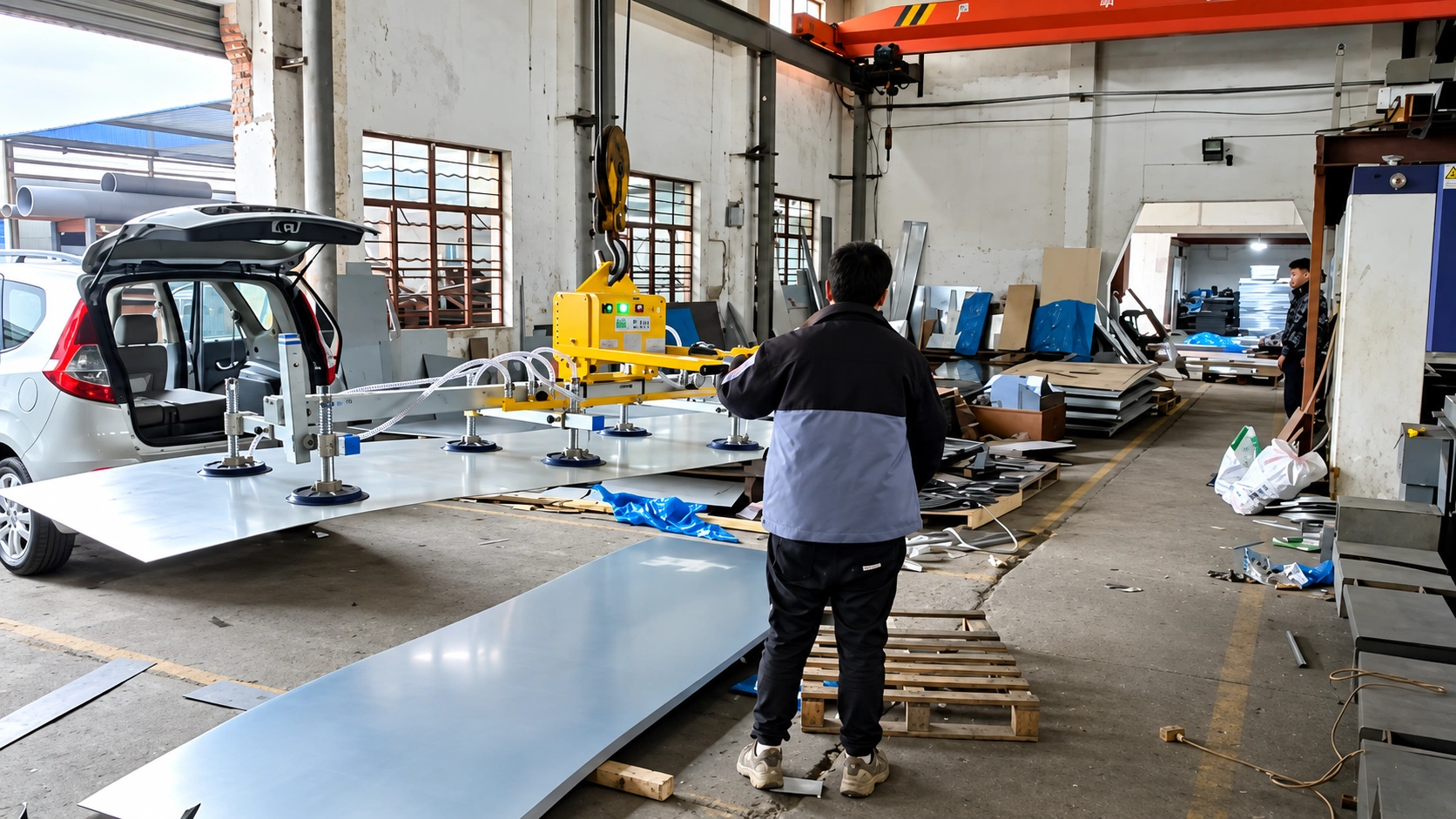
The customer reported approximately 60 sheets per eight-hour shift and five working days of use without recharging, with the battery indication still at approximately 30%. This reflects the project's work cycle rather than continuous pump operation for forty hours. The customer also reported a 20–30% improvement in loading efficiency.
A project-specific test on a flat stainless steel surface retained vacuum for 24 hours with the power switched off and without powered vacuum replenishment. This is a result for the tested conditions, rather than a universal retention guarantee or permission to store a suspended load unattended.
Read the battery vacuum lifter case for laser cutting sheet loading in Latvia for the handling video, operating conditions and project details.
What information is needed to select a sheet metal vacuum lifter?
Workpiece material and contact surface
Identify the metal and the surface the cups will touch. Include coatings, protective films, oil, scale, texture, holes and temperature conditions. Protective layers and appearance-sensitive finishes should be checked for seal quality and cup-contact marks.
Weight, dimensions and thickness
Provide maximum and minimum plate sizes, actual weights and thicknesses. A long plate needs appropriate frame support and cup spacing. A thin sheet may flex even when its weight is below the lifter rating.
Required movement and working heights
Describe the pickup point, destination, travel route and required movement. State whether the sheet stays horizontal or needs tilting or rotation. Include pickup and placement heights, available headroom and nearby obstructions.
Existing lifting equipment and utilities
Identify the crane, jib or proposed transport arrangement. Crane capacity must cover the workpiece plus the lifting attachment and other suspended equipment. Supply site voltage or compressed-air pressure and flow as applicable.
Work cycle and operating requirements
State the number of sheets per shift, shift length, frequency of lifts and charging opportunities. Confirm vacuum monitoring, release controls, reserve or backup arrangements and inspection requirements for the quoted configuration.
When the contact surface or sheet stiffness is uncertain, a representative test can help establish an appropriate suction arrangement before the final configuration is confirmed.
Frequently asked questions
Can a vacuum lifter handle stainless steel and aluminium?
Yes, suitable stainless steel and aluminium sheets can be handled because vacuum gripping does not depend on magnetism. The plate still needs an appropriate contact surface, cup arrangement and rated handling configuration.
Will suction cups leave marks on the plate?
The result depends on cup material, cleanliness, coating sensitivity and movement at the contact area. For appearance-sensitive plates, assess a representative surface. In WOLIFT's carbon steel pickling project, the customer reported handling scratches reduced to almost zero.
Can a battery vacuum lifter operate without an overhead crane?
The battery supplies the vacuum system. A crane or another approved lifting and transport arrangement is still needed to raise and move the plate. Forklift-compatible configurations require a separate review of the lifter, forklift and transfer route.
How long does a battery charge last?
There is no single runtime for every application. The Latvia case reports five working days without recharging at about 60 sheets per eight-hour shift, with approximately 30% battery remaining. Different leakage rates, pump duty and work cycles can change consumption.
How long can a vacuum lifter retain vacuum after power loss?
Retention depends on the seal, vacuum circuit and workpiece. WOLIFT's Latvia case reports a 24-hour power-off test on flat stainless steel without powered replenishment. The quoted unit's test conditions and operating instructions determine how that result should be interpreted for a new application.
Can individual suction cups be switched off for smaller plates?
Some configurations provide individual cup control. WOLIFT's AC project shows six active cups handling a 6 m, 2 tonne plate. The available capacity and support arrangement must be confirmed for that cup pattern; the full twelve-cup rating does not automatically carry over.
Can a standard plate lifter turn a sheet through 90°?
Specify a dedicated 90° tilting vacuum lifter when controlled angle changes are required. Its cup arrangement and rating must cover the actual turning motion.
Discuss your sheet metal handling requirement
Send the material, plate dimensions, thickness, actual weight, surface photos, handling route, working heights and intended work cycle. Include the available crane and site power or compressed-air supply.
Explore more sheet metal handling projects or contact WOLIFT for a project-specific equipment review.
Discuss your handling requirement with WOLIFT
Share the workpiece data and site conditions for an initial engineering review.