

WOLIFT AC Vacuum Lifter for 3 Tonne Carbon Steel Plate Handling After Pickling
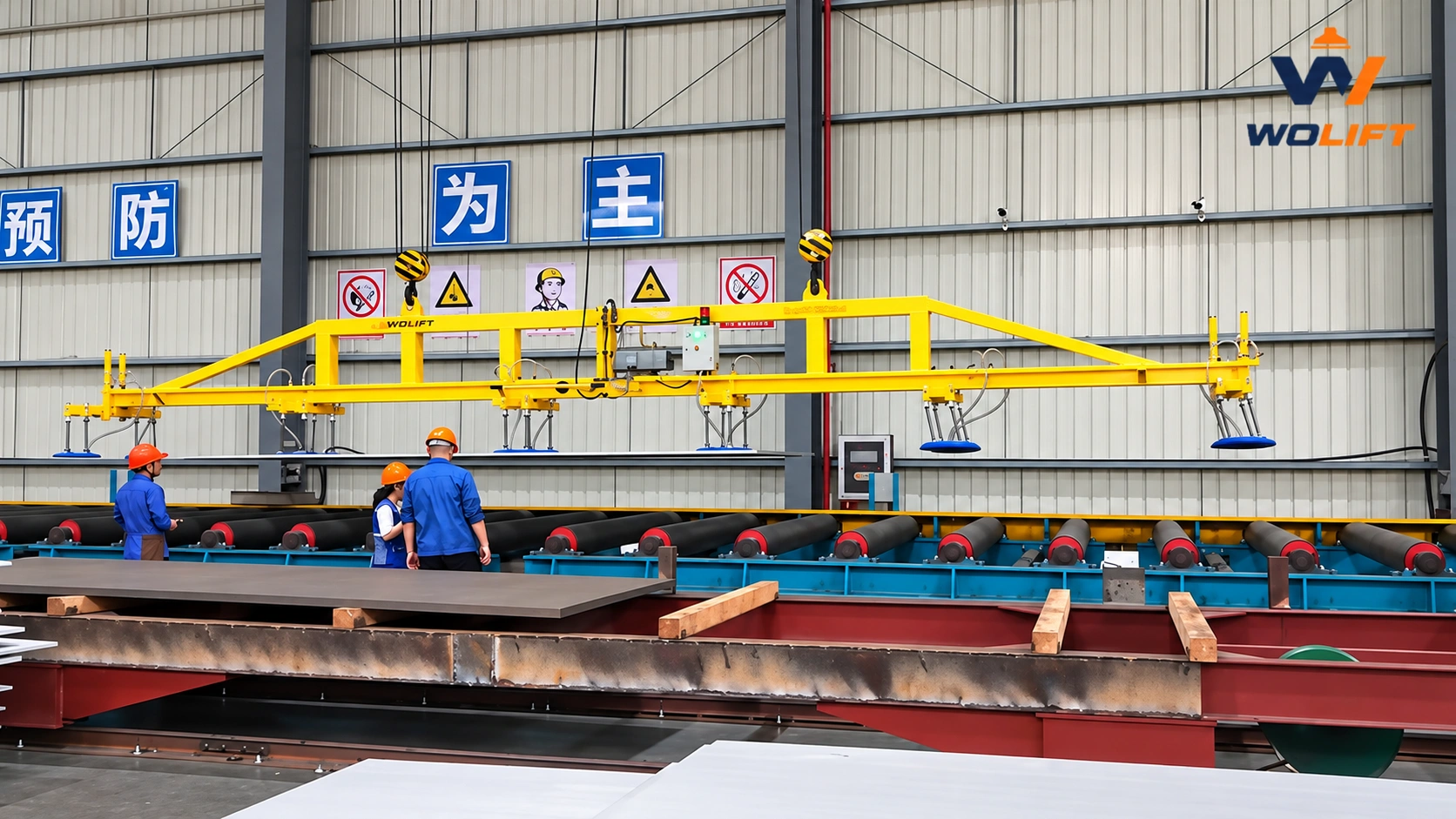
A metal sheet surface treatment factory needed to move long carbon steel plates from the end of its pickling line to the packaging area without repeating the surface scratches associated with hook handling. WOLIFT supplied a 5,000 kg rated AC vacuum lifter for use with the customer's existing 10 tonne overhead crane. The main workpiece measures 12,000 × 2,500 mm and weighs 3,000 kg.
Project specifications
| Customer process | Metal sheet surface treatment and post-pickling unloading |
|---|---|
| Material | Carbon steel plate |
| Main workpiece | 12,000 × 2,500 mm; 3,000 kg |
| Equipment model | WO-BC500AC |
| Rated load | 5,000 kg |
| Frame | Fixed frame |
| Suction cups | 12 × Ø450 mm, with individual on/off control |
| Power supply | 380 V, 50 Hz via cable reel |
| Control | Manual suction and release |
| Supporting equipment | Customer's existing 10 tonne overhead crane |
| Vacuum monitoring | Internal pressure sensor and vacuum alarm |
| Backup system | Separate UPS unit with battery and vacuum pump |
The challenge: protecting plate surfaces after pickling
The plates needed to be removed from the pickling line and transferred to packaging while preserving the treated surface. The previous hook-handling method could move the load, but the customer reported scratches during handling. The replacement therefore needed to grip the long, flat plates from above and work with the factory's existing overhead crane.
The handling arrangement also had to account for the full 12 m plate length, the actual 3 tonne workpiece weight and the plate's protective surface layer after pickling. Cup contact positions had to be checked across the workpiece rather than selected from lifting capacity alone.
The WOLIFT solution: a 5 tonne AC vacuum plate lifter
WOLIFT supplied a fixed-frame AC-powered sheet metal vacuum lifter with twelve Ø450 mm suction cups. Each cup has individual on/off control, allowing an approved contact arrangement to be selected for a particular plate size.
The customer's 10 tonne overhead crane provides lifting and travel movement. A cable reel supplies 380 V, 50 Hz power to the vacuum attachment, allowing the existing crane system to remain in service rather than adding a separate workstation crane.
Vacuum monitoring and project-specific backup
An internal pressure sensor monitors vacuum level, and the equipment provides a vacuum alarm. This project also includes a separate UPS backup system containing a battery and vacuum pump, providing a backup vacuum source if the normal supply is interrupted.
The UPS arrangement is specific to this installation and should not be assumed to be standard on every AC vacuum lifter. Individual cup control also requires an approved operating arrangement: switching cups off changes the available gripping configuration, so the full twelve-cup rated load does not automatically apply when fewer cups are active.
The 5,000 kg rated attachment was configured around the actual plate dimensions, surface condition, cup layout and the customer's existing 10 tonne overhead crane.
Project video: the shorter plate configuration
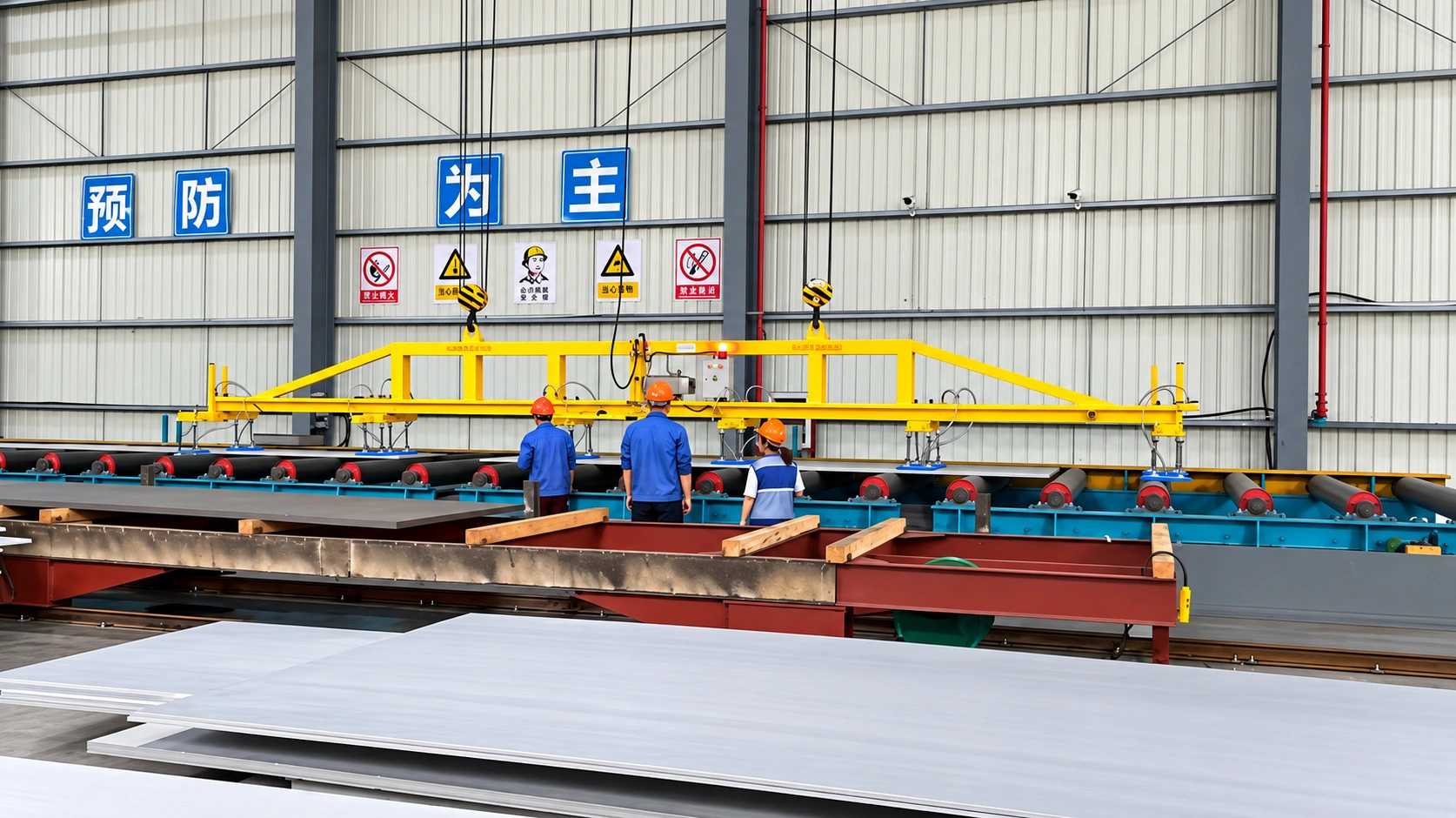
The project video shows a separate shorter-plate configuration: a 6,000 mm carbon steel plate weighing 2,000 kg is handled with six suction cups active. This is different from the 12,000 × 2,500 mm, 3,000 kg main workpiece described above.
The result: fewer handling marks and a more efficient unloading process
After the vacuum lifter was introduced, the customer reported that handling-related plate scratches were reduced to almost zero and that unloading efficiency improved by approximately 30% compared with the previous method. These are customer-reported results from this installation, not independently audited measurements or a performance guarantee for other plate-handling applications.
For other plate sizes or surface conditions, WOLIFT reviews the workpiece weight, dimensions, cup contact areas, crane capacity, electrical supply and handling route before confirming a configuration. Browse more sheet metal handling solutions or contact WOLIFT for a project-specific review.
Questions buyers ask about a similar plate handling system
These are the practical points production and engineering teams usually need to confirm before selecting an AC vacuum lifter.
Does a 3 tonne plate require a lifter rated at exactly 3 tonnes?
This installation uses a 5 tonne rated attachment to handle a 3 tonne plate. That is the selected project configuration, not a universal capacity rule. Frame length, cup layout, surface condition and the actual handling direction also determine the appropriate unit.
Can the lifter use fewer suction cups for a shorter plate?
This project's supplied video shows six active cups on a 6 m, 2 tonne plate. Individual cup control can accommodate an approved shorter-plate arrangement, but the capacity for that arrangement must be confirmed. The twelve-cup rating is not automatically retained.
Can we use our existing overhead crane?
Yes, this project uses the customer's existing 10 tonne overhead crane with a cable reel for attachment power. A new installation must confirm the crane's capacity for the plate plus attachment, connection arrangement, headroom and travel path.
Discuss a similar handling requirement
Share the workpiece data and site conditions for an initial engineering review.