


Showing product image 1 of 2
GLASS VACUUM LIFTERS
Curved Glass Vacuum Lifter for Installation and Handling
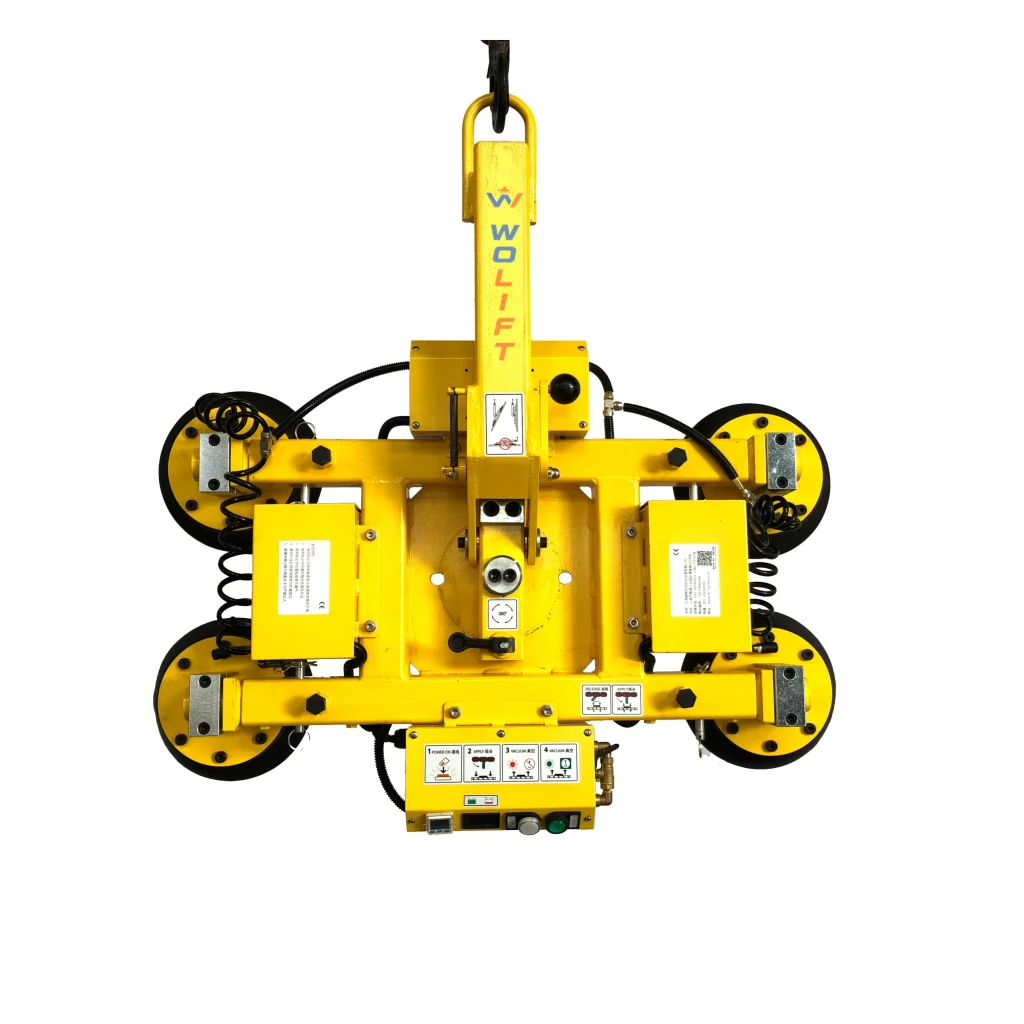
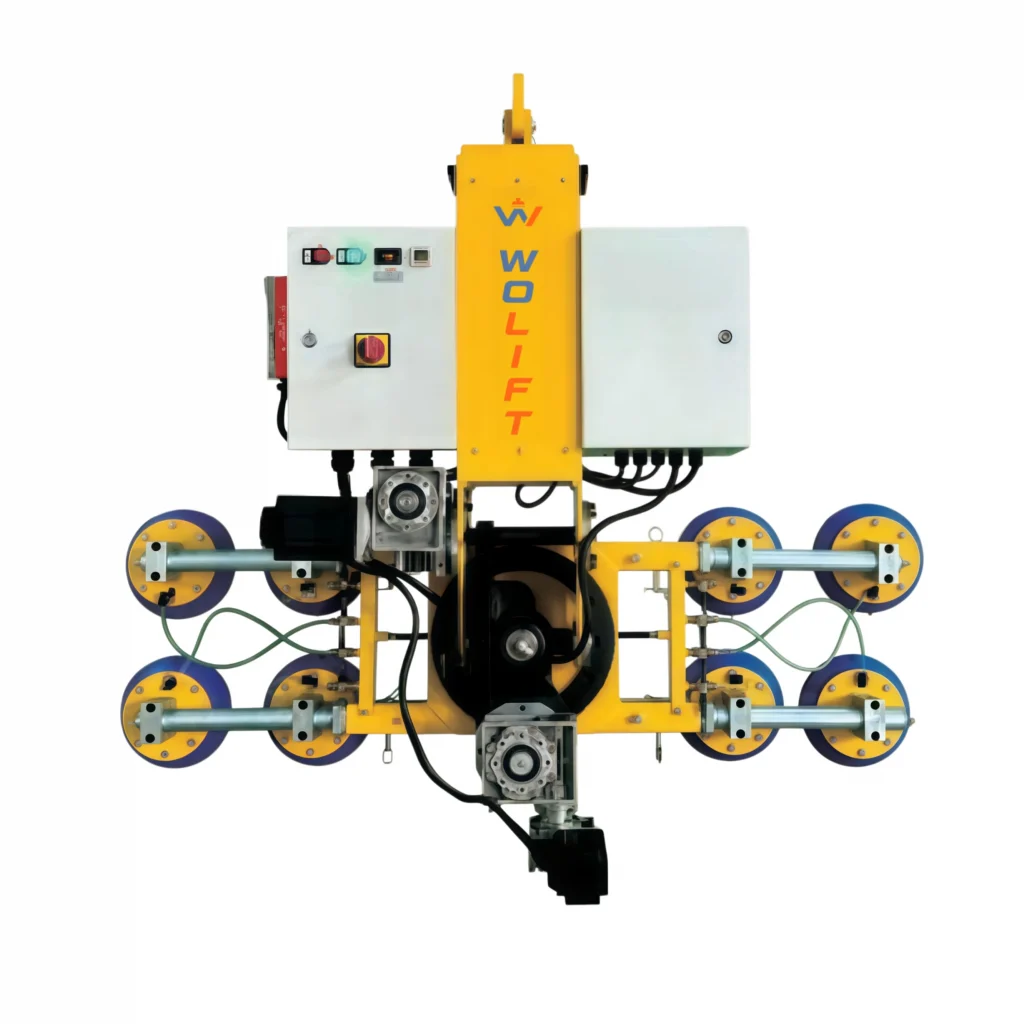
WOLIFT curved glass vacuum lifters use bowl-shaped suction cups and adjustable cylindrical frames to handle inner and outer curved glass for installation, handling and positioning.
Curved glass handling
Curved glass vacuum lifter for inner and outer curved surfaces
WOLIFT curved glass vacuum lifters are designed for curved glass hoisting, installation and handling. The bowl-shaped suction cups, cylindrical frame and adjustable cup positions help the lifter adapt to different glass curvatures, including inner-curve and outer-curve contact.
Curved architectural glass
Suitable for curved building glass that requires stable suction contact and controlled positioning.
Curved curtain wall glass
Designed for curved curtain wall glass hoisting, facade installation and outdoor project handling.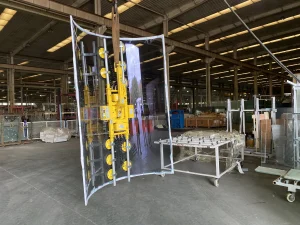
Curved facade glass
Useful for curved facade panels where suction cup angle and position must match the glass arc.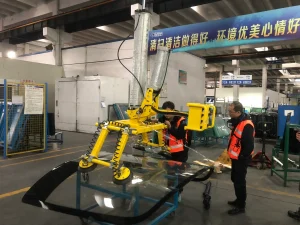
Automotive windshield glass
Can be used as an extended solution for windshield glass handling and installation after curvature evaluation.Selection note:
Curved glass should be evaluated according to radius, arc direction, glass size, weight, suction contact area and whether the lifter needs to hold the inner curve or outer curve.
Curved surface design
Bowl-shaped suction cups and adjustable cylindrical frame
The curved glass lifter is different from a standard flat glass vacuum lifter. Its bowl-shaped suction cups can better follow curved surfaces, and the suction cup positions can be adjusted along the cylindrical frame to fit different glass arcs.How to choose
Choose the right curved glass vacuum lifter series
WOLIFT offers manual and electric curved glass vacuum lifters according to load capacity, control preference, project size and positioning requirements.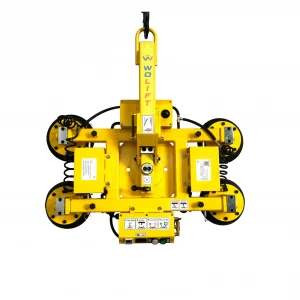 WO-BLHM (s)Manual curved glass vacuum lifter, DC12V, 250-600 kg, with 0-90° manual flip and 0-360° manual rotation.
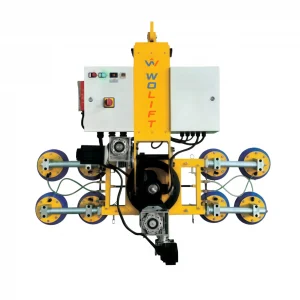 WO-BLHM (d)Electric curved glass vacuum lifter, DC48V, 400-600 kg, with 0-90° electric flip and 0-360° electric rotation.
Core functions
Focused on curved surface contact and arc adjustment
This product page focuses on the two functions that matter most for curved glass: stable curved surface contact and adjustment for inner or outer glass arcs.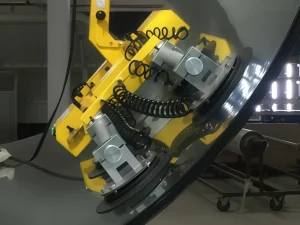 01Curved surface contact with bowl-shaped suction cups
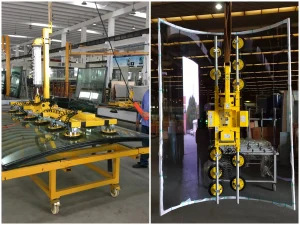 02Inner / outer curve adjustment by cup position
Operation video
Curved Glass Vacuum Lifter for Shaped Glass Handling
See how the WOLIFT curved glass vacuum lifter helps operators lift, move, position, and install curved glass, shaped glass, architectural glass, and special glass panels with better control. The system can be configured with a customized suction pad layout to match curved surfaces and support safer handling in glass production, curtain wall installation, warehouse transfer, and special glazing applications.Curved glass vacuum lifter model reference
Model selection should consider curved glass weight, size, curvature radius, inner or outer arc contact, sucker quantity, power system and required flipping or rotation. Final configuration should be confirmed with WOLIFT engineers.View model table
| Model | WO-BLHM250 (s) | WO-BLHM500 (s) | WO-BLHM600 (s) | WO-BLHM400 (d) | WO-BLHM600 (d) |
|---|---|---|---|---|---|
| Loading | 250 kg | 500 kg | 600 kg | 400 kg | 600 kg |
| Size mm | 1200x560 | 1800x560 | 2400x560 | 1800x560 | 2400x560 |
| Sucker size mm | Dia. 240 | Dia. 240 | Dia. 240 | Dia. 240 | Dia. 240 |
| Sucker number | 4 | 8 | 12 | 8 | 12 |
| Power system | DC12V | DC12V | DC12V | DC48V | DC48V |
| Control mode | Manual / Remote | Manual / Remote | Manual / Remote | Wireless remote | Wireless remote |
| Function | 0-90° manual flip + 0-360° manual rotation | 0-90° manual flip + 0-360° manual rotation | 0-90° manual flip + 0-360° manual rotation | 0-90° electric flip + 0-360° electric rotation | 0-90° electric flip + 0-360° electric rotation |
FAQ